The Wisdom of Earth & Lime

Explore the science, history, and heritage behind traditional Indian eco-construction. Learn why our ancestors built the way they did, and why it's still the best way to build today.

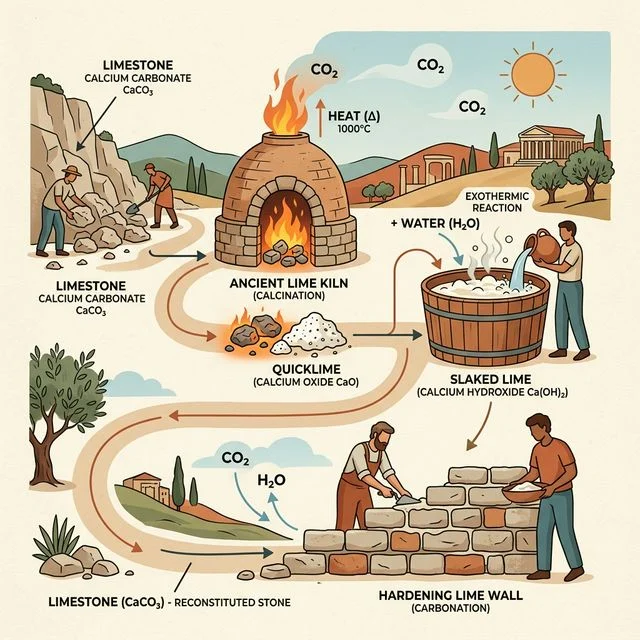
The Living Stone: What is the Lime Cycle?

The Living Stone: What is the Lime Cycle?

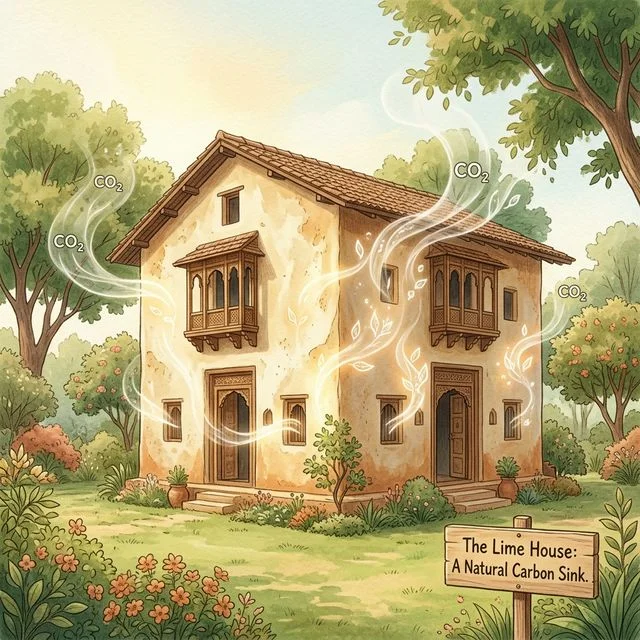
Did you know that when we use lime plaster, we are actually reverse-engineering stone? Through the 'Lime Cycle', limestone is burnt, mixed with water, applied to your walls, and then slowly absorbs CO₂ from the air to turn back into solid limestone. Your walls literally breathe and heal themselves over time, becoming stronger year after year.

2 min read

Thermal Mass: Why Mud Houses Stay Cool

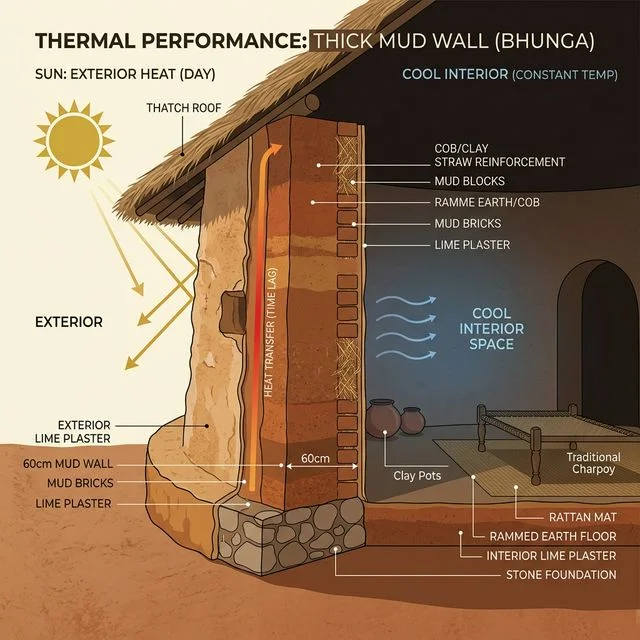
Thermal Mass: Why Mud Houses Stay Cool

Before air conditioning, our ancestors mastered climate control using 'Thermal Mass'. Thick mud and rammed earth walls are dense and porous. They absorb the intense daytime heat very slowly (thermal time-lag). By the time the heat penetrates, it's cool nighttime, and the walls release warmth back outside. This keeps interiors naturally cool in summer and warm in winter.

2 min read
Araish: Rajasthan's Mirror-Finish Plaster

Araish: Rajasthan's Mirror-Finish Plaster

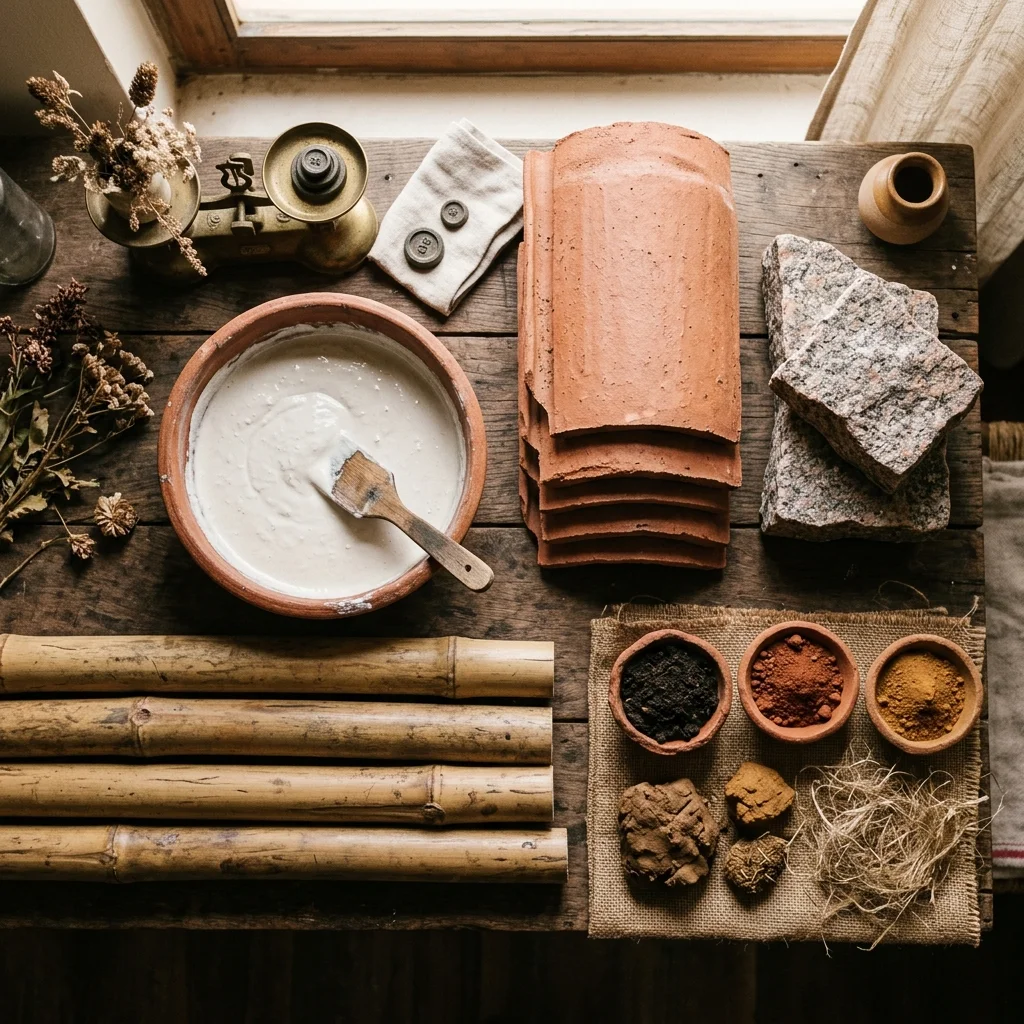
Ever wondered how the palaces of Rajasthan achieved walls that feel like velvet and shine like mirrors? This is 'Araish', a luxurious traditional technique. It blends aged lime putty with pure white marble dust and natural gums. Applied in microscopic layers and burnished by hand, it creates a breathtaking, water-resistant finish that lasts centuries.

2 min read
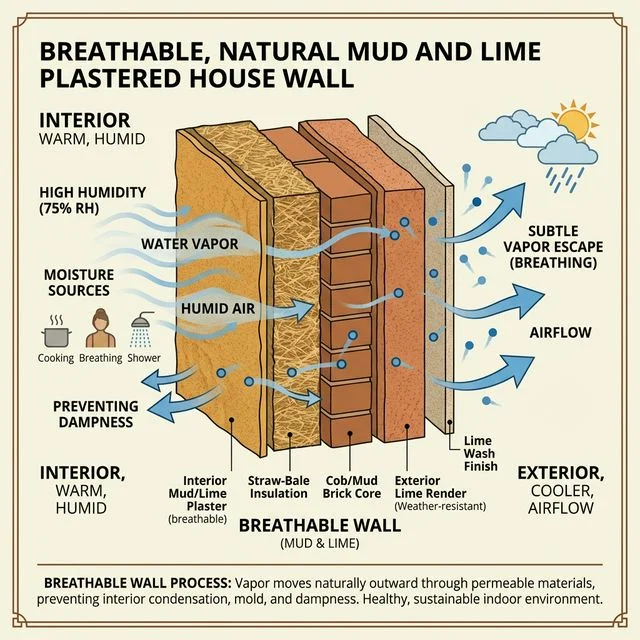
Breathable Walls: The Antidote to Dampness

Breathable Walls: The Antidote to Dampness

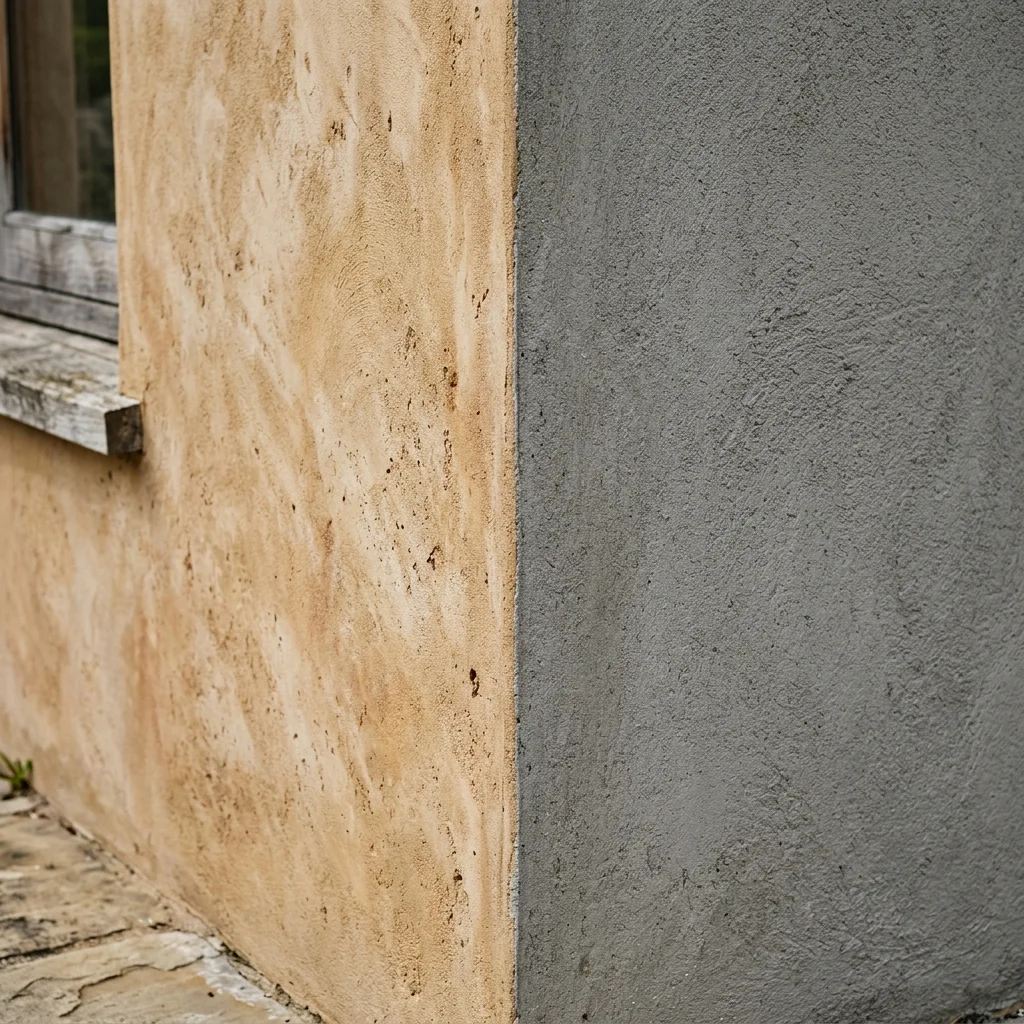
Modern cement traps moisture, leading to peeling paint, dampness, and unhealthy mold. Traditional lime and mud walls are hydrophilic and vapor-permeable—they 'breathe'. They naturally absorb excess indoor humidity when it's damp, and release it when it's dry, acting as an automatic climate regulator for a healthier home.

2 min read
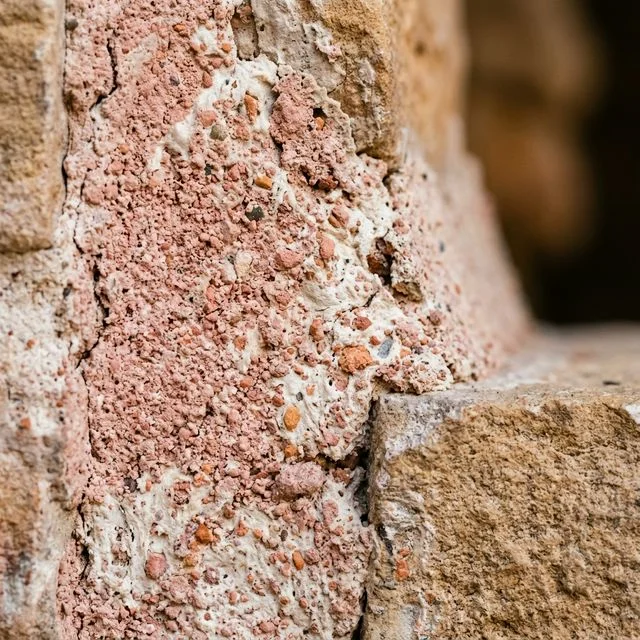
Surkhi: Ancient Indian Waterproofing

Surkhi: Ancient Indian Waterproofing

Long before chemical waterproofing, ancient Indian builders used 'Surkhi'. Made by grinding perfectly baked earthen clay (like rejected terracotta pots) and mixing it with lime, Surkhi creates a hydraulic reaction. This pinkish mortar is incredibly strong, entirely waterproof, and the secret behind ancient Indian stepwells (Baolis) and temples.

2 min read
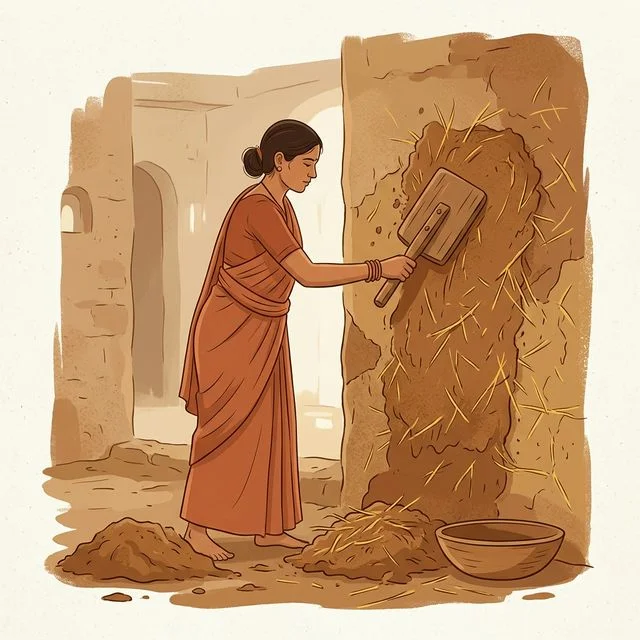
Thappi & Gobar: The Science of Cow Dung

Thappi & Gobar: The Science of Cow Dung

It might sound surprising today, but blending cow dung (Gobar) into mud plaster is brilliant ancient science. Cow dung is rich in fine, undigested plant fibers that act like micro-reinforcement, preventing mud from cracking as it dries. It also contains natural enzymes that repel insects and acts as a mild natural antiseptic.

2 min read
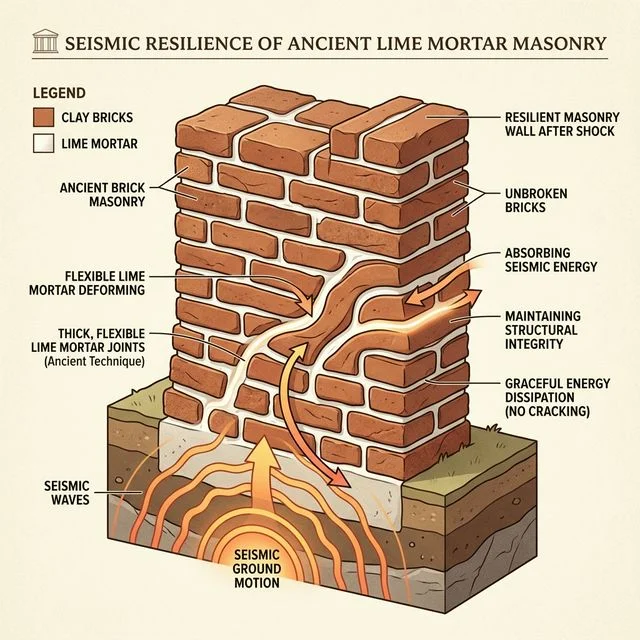
Earthquakes and Mud: Flexible Architecture

Earthquakes and Mud: Flexible Architecture

Why do many ancient masonry structures survive earthquakes better than modern concrete? The secret is flexibility. Cement is rigid; when the earth shakes, it snaps. Traditional lime mortar is softer and acts like a cushion between bricks, allowing the building to flex and absorb seismic shocks. If microscopic cracks form, the lime naturally heals them.

2 min read
Chettinad Egg Plaster: The White Wonder

Chettinad Egg Plaster: The White Wonder

The grand mansions of Chettinad, Tamil Nadu, boast gleaming white walls that never seem to fade. This traditional 'Karai' plaster blends slaked shell-lime with the whites of thousands of eggs and local plant saps. The proteins in the egg whites act as a powerful organic binder and waterproofing agent, creating an incredibly smooth and radiant finish.

2 min read
Rammed Earth: Building with the Ground

Rammed Earth: Building with the Ground

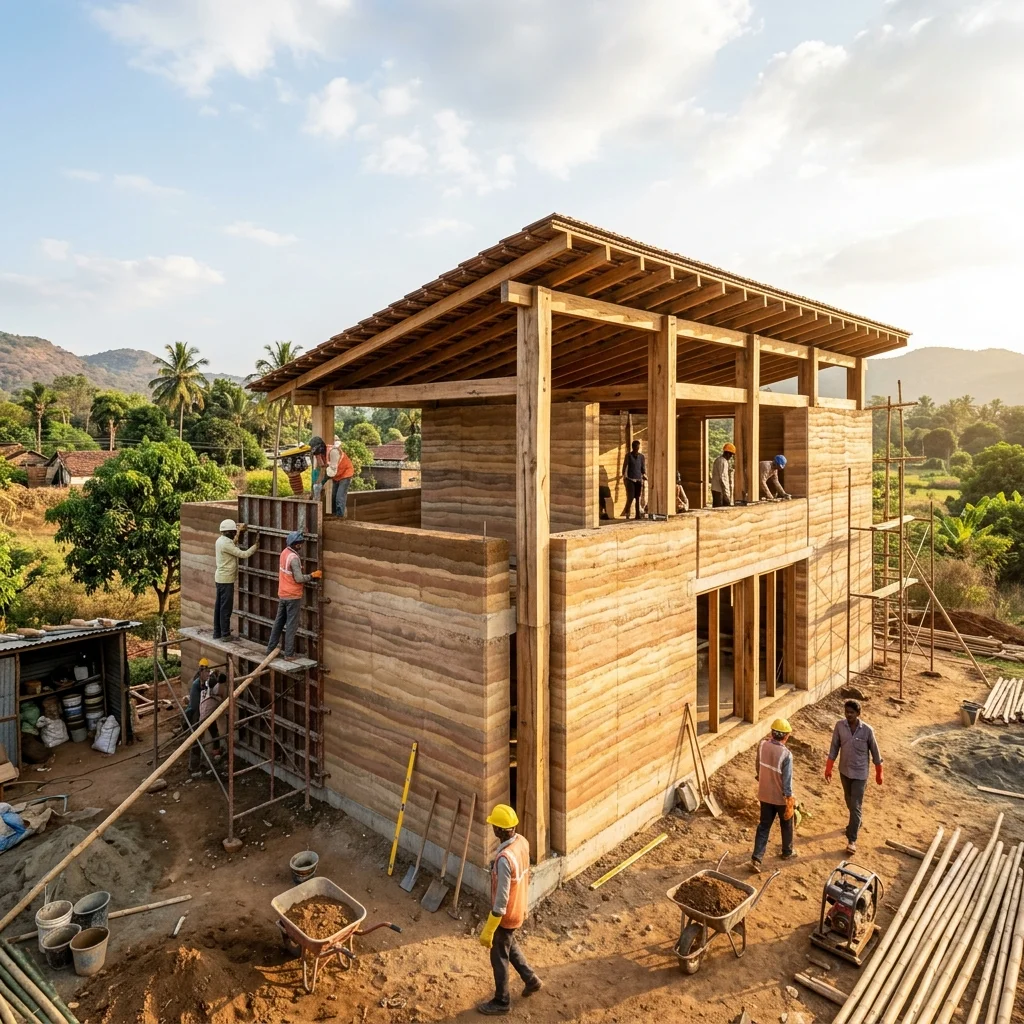
Rammed earth is one of the oldest and most sustainable building methods. Instead of manufacturing bricks, we take natural subsoil—a precise mix of gravel, sand, silt, and clay—place it in a wooden frame, and physically pound it until it's as dense as rock. This creates stunning, naturally striped, load-bearing walls with near-zero carbon footprint.

2 min read
The Carbon Sink: Fighting Climate Change

The Carbon Sink: Fighting Climate Change

Cement production is responsible for 8% of global CO2 emissions. Traditional lime is a climate champion. While producing lime releases some carbon initially, the 'Lime Cycle' demands that the plaster must re-absorb that exact same amount of CO2 from the atmosphere to harden back into stone. A lime-plastered house actively cleans the air as a permanent carbon sink.

2 min read
Mud House Cost in India: The Honest 2026 Budget Guide

Mud House Cost in India: The Honest 2026 Budget Guide

Are mud houses really cheap? We break down the realistic per-square-foot cost of professional mud house construction in India. Learn where your budget goes, from the Karungal stone plinth to natural clay, structural timber, and skilled rural craftsmanship.

4 min read
Lime Plaster vs. Cement Plaster: The Great Comparison

Lime Plaster vs. Cement Plaster: The Great Comparison

Portland cement has only existed for 150 years, yet it causes dampness, cracked paint, and trapped moisture. We compare slaked lime plaster to cement plaster across breathability, flexibility, durability, and health.

5 min read
Do Mud Houses Dissolve in the Rain? Monsoon Myths Busted

Do Mud Houses Dissolve in the Rain? Monsoon Myths Busted

It is the #1 question we get: will my mud home wash away in the monsoon? We detail the structural engineering and traditional Indian secrets of plinths, overhangs, and lime washes that keep earthen houses dry and durable.

4 min read